When evaluating underwater metal protection, many operators focus on initial product cost. Yet the true financial impact lies not in purchase price — but in lifecycle expense.
Strip cycles, labor hours, downtime, fuel inefficiency, and substrate degradation collectively define total cost of ownership.
The Hidden Cost of Stripping
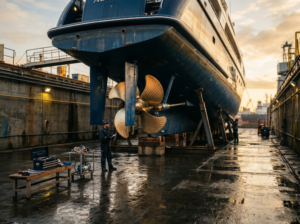
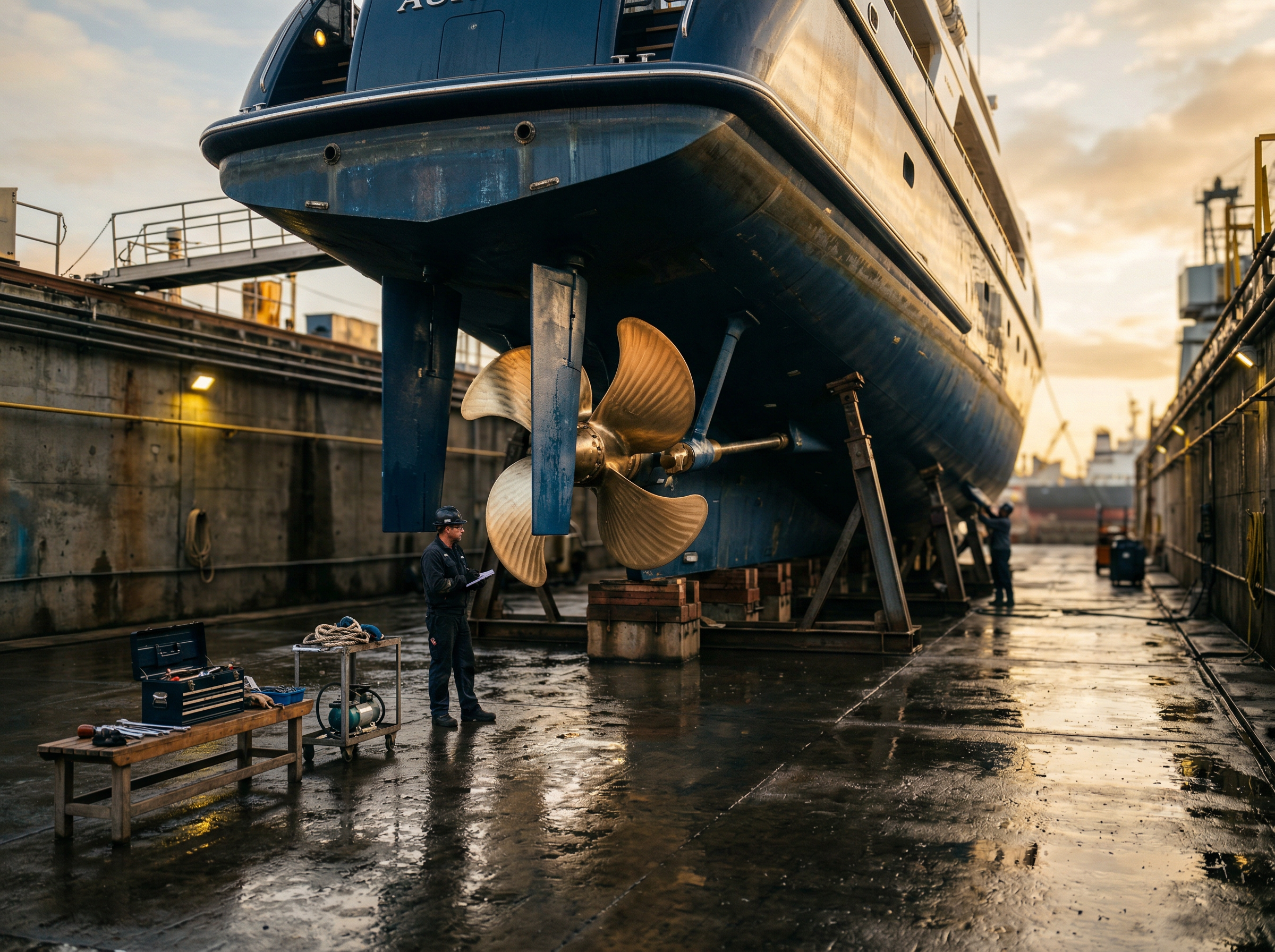
Multi-layer coating systems frequently require full removal before reapplication. Abrasive blasting or aggressive stripping increases yard time and labor cost.
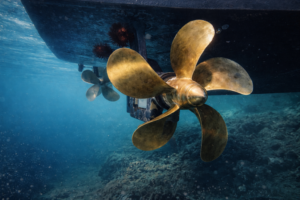
Repeated stripping also affects metal integrity. Precision components such as propellers and shafts depend on geometry for optimal performance. Removing material during preparation can subtly alter hydrodynamic balance.
Lifecycle planning must account for substrate preservation.
Downtime and Operational Disruption
Every additional coating layer adds complexity:
-
Mixing ratios
-
Pot life limitations
-
Intercoat timing windows
-
Environmental condition constraints
Complex systems increase the risk of application error and scheduling delays.
Simplified single-application systems reduce procedural steps, lowering both risk and downtime exposure.
Operational continuity has measurable financial value.
Fuel Efficiency and Surface Condition
Marine growth increases surface roughness. Increased roughness increases drag. Increased drag increases fuel consumption.
Over time, even small efficiency losses accumulate significantly.
Maintaining smooth, clean underwater metal surfaces protects propulsion efficiency and reduces unnecessary fuel expenditure.
Lifecycle cost analysis must include fuel impact, not just coating price.
Renewal Versus Reconstruction
A renewable system that integrates new material over existing film changes cost structure dramatically.
Instead of full removal and rebuild, operators perform light preparation and reinforcement. Labor hours decrease. Abrasive media cost decreases. Yard time decreases.
Most importantly, substrate integrity remains preserved.
This continuity-based approach spreads cost more evenly across service intervals rather than concentrating expense into disruptive strip events.
Predictability as a Strategic Asset
Marine operations depend on scheduling certainty. Unplanned strip failures or premature coating breakdowns disrupt logistics.
Engineered systems that maintain film cohesion and structural integrity under hydrodynamic stress allow maintenance planning to be proactive rather than reactive.
Predictability reduces financial volatility.
Environmental Compliance and Future Risk
Non-biocidal systems reduce exposure to regulatory tightening on toxic leaching. Selecting structural, non-sacrificial protection today reduces compliance risk tomorrow.
Strategic coating selection should consider regulatory trajectory as part of lifecycle cost.
Designing for Longevity
Long-term performance is not achieved by stacking layers. It is achieved by designing systems that integrate with substrate, maintain structural cohesion, support renewal compatibility, and preserve surface behavior.
Marine protection is no longer just about preventing fouling.
It is about engineering stability across operational cycles.