Marine fouling has challenged vessel operators for centuries. Barnacles, algae, slime, and encrusting organisms naturally seek stable surfaces to colonize. Traditional solutions relied on toxicity — preventing attachment by creating hostile chemical environments.
Modern foul-release technology takes a different approach.
Instead of chemical deterrence, it engineers surface behavior.
What Is Surface Energy?
Surface energy describes how strongly a material interacts with other substances. High surface energy materials promote strong adhesion. Low surface energy materials resist attachment.
In marine environments, a high-energy surface gives organisms a foothold. A reduced-energy surface weakens that grip.
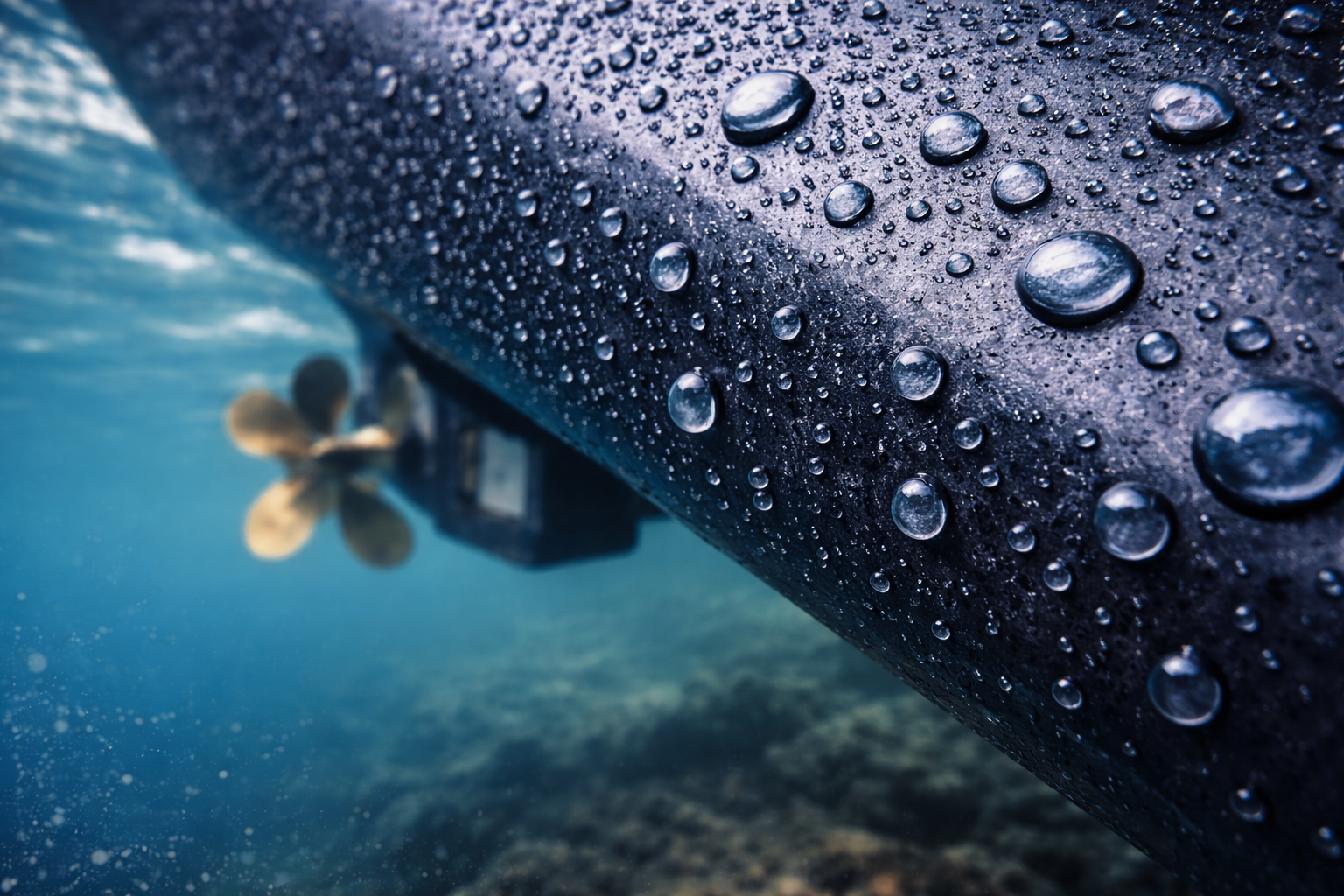
Foul-release systems operate by lowering surface energy characteristics so that marine organisms cannot achieve strong physical bonding. When the vessel moves or undergoes routine cleaning, the organisms release more easily.
This is not chemical poisoning. It is physics.
Physical Interaction Over Chemical Depletion
Biocidal coatings depend on gradual chemical release. As toxins leach into surrounding water, their effectiveness declines. Over time, the coating’s active protection diminishes.
Surface-engineered coatings do not depend on depletion. Their performance characteristics remain embedded in the film structure itself.
As long as film integrity is preserved, the foul-release behavior remains present.
This stability makes lifecycle planning more predictable.
Hydrodynamic Considerations
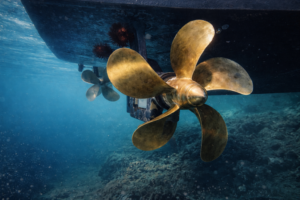
Underwater metal components operate in high-flow zones. Propellers and stabilizers experience constant hydrodynamic pressure. Coatings must balance two objectives:
-
Maintain reduced surface energy.
-
Remain mechanically stable under load.
If a coating is too soft, it may erode. If it is too rigid, it may crack or delaminate.
Modern monolithic film engineering accounts for these variables, structuring the matrix to tolerate hydrodynamic stress while preserving surface properties.
Durability and surface behavior must coexist.
Mechanical Cleaning Compatibility
No foul-release system prevents growth entirely during extended idle periods. When vessels remain stationary, organisms will settle. The difference lies in attachment strength.
Lower surface energy allows for easier mechanical removal without aggressive scraping.
This is critical for underwater metal. Excessive scraping can damage substrates, particularly bronze and aluminum alloys.
By reducing adhesion strength at the physical level, maintenance becomes less destructive.
The Role of Substrate Integration
Surface energy management works only when adhesion to the substrate is secure. If a coating peels, its surface properties become irrelevant.
Direct bonding to properly prepared metal ensures that reduced-energy behavior remains where it belongs — at the outermost surface — without risking interlayer failure.
Strong substrate adhesion and controlled surface energy must operate together.
Long-Term Performance Stability
The true measure of foul-release technology lies not in short-term cleanliness but in consistency over time.
A stable film architecture that maintains surface behavior across seasons allows operators to extend service intervals, reduce strip cycles, and preserve underwater component geometry.
Efficiency gains compound over years, not weeks.
The Future of Non-Sacrificial Protection
As environmental regulations tighten and lifecycle cost awareness grows, surface-engineered systems will likely continue replacing sacrificial models.
The shift represents more than a material upgrade. It reflects a change in philosophy — from chemical defense to structural design.
Performance achieved through physics is inherently more stable than performance dependent on chemical depletion.
And in marine environments, stability defines reliability.